Recently, I had one of those mornings that perfectly captured the emotional contradictions of professional life.
A rejection email landed first – Jenni Field and I weren’t selected to speak at the IABC World Conference. Shortly after, I opened my inbox again to find the final proof of Decoding Confidence, my new book, ready for its last edit and proof.
Two halves of the same morning!
I don’t mind rejection. I’ve been in this industry long enough to see it for what it often is: redirection. In fact, I’d shared a post about managing rejection on LinkedIn just days before, so the timing felt almost ironic.
What stayed with me, though, wasn’t the fact of rejection; it was how it was communicated.
According to the panel, we were unsuccessful for two reasons. First, our topic (credibility and confidence) wasn’t broad enough to appeal to the wider audience. Fair enough. But the second reason was that we had made a spelling mistake in the application (ironically, the word consultant 🤣).
And this is what stopped me in my tracks. It stopped being about personal disappointment and started being about inclusion.
If spelling and grammar are deciding factors in a speaker selection process, particularly when the role is to speak on stage (i.e., not to submit written work), then a whole host of people are being excluded before they even reach the stage.
Jenni and I are experienced enough to handle this type of feedback, but if you’re early in your speaking career, feedback like this doesn’t just redirect you; it can quietly destroy your confidence.
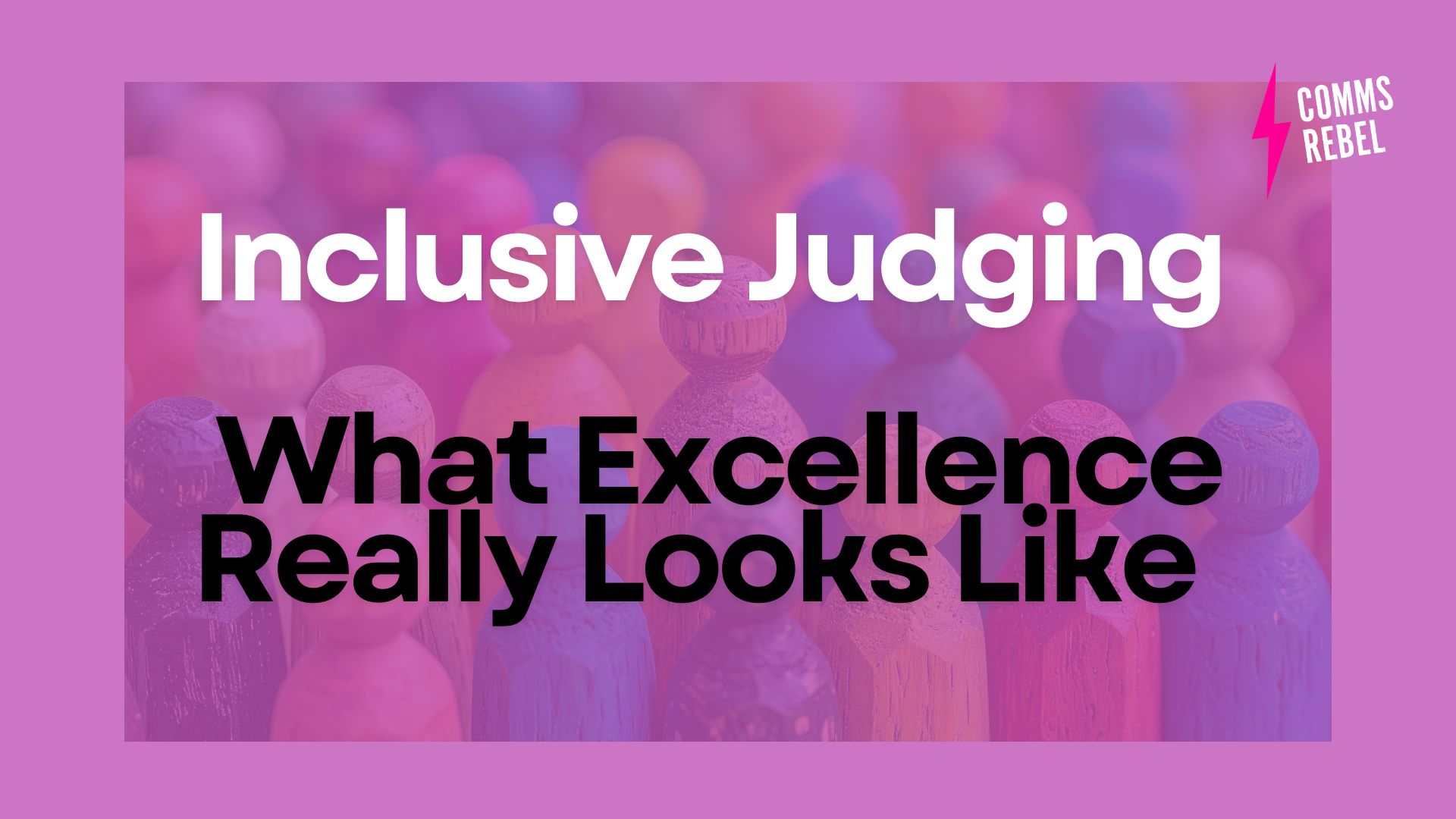
That is why inclusive judging matters. That is why I believe it’s important to share some best practices for inclusive judging in speaker selection.
Judging Is Never Neutral
As someone who has judged multiple times, I want to note that judging is often presented as an objective exercise. Criteria are defined, scores are assigned, rankings are produced, and decisions are often justified.
But judging is never neutral.
Research in diversity, equity, and inclusion (DEI) shows that human decision-making is shaped by unconscious bias, social norms, and power structures. Every judging process reflects assumptions about professionalism, excellence, credibility, and merit.
These assumptions are shaped by our own educational backgrounds, cultural norms, communication styles, language capabilities, neurodiversity, disability, socioeconomic status, and access to resources like time, support, and mentoring.
When panels fail to acknowledge this, they risk making decisions based on their own biases and lived experience, which can discriminate against people who are simply different from them.
The Problem With Surface-Level Errors
Look, I’m a communication expert. I completely recognise the importance of good spelling and grammar. But here’s where many judging processes quietly become exclusionary.
Spelling errors can arise from dyslexia or other learning differences. They happen when you’re writing in a second or third language. They crop up through assistive technology quirks, cognitive load, stress, or burnout.
None of these factors meaningfully predict the quality or originality of someone’s ideas, their subject-matter expertise, their ability to speak clearly and compellingly on stage, or the impact of their work on communities or audiences.
Yet many panels continue to use surface-level presentation as a proxy for competence. This is indirect discrimination in action – a “neutral standard” that disproportionately disadvantages particular groups.
When spelling mistakes are weighted heavily, especially without being explicitly stated in the criteria, it reinforces systemic barriers rather than breaking them down.
Start With Purpose
Before reviewing submissions, panels need to ask what is the actual purpose of this selection?
If you’re selecting a speaker, are you judging writing ability or verbal communication and insight? If you’re awarding impact, are you judging polish or outcomes and change? If you’re recognising leadership, are you judging it by compliance, influence, or courage?
The criteria should be relevant, and if written accuracy is essential to the role, say so explicitly and explain why.
If it’s not essential, it should never influence outcomes.
Make Criteria Explicit
Transparency matters. So publish clear criteria in advance. Define what “good” looks like for each criterion. Weight them intentionally and visibly. And train judges to assess only against those criteria. Also, please make sure your panel is representative, not just in ethnicity but in age, disability, sexuality, and lived experience.
Unspoken criteria are where bias thrives, and I’ve seen it happen again and again. Decision-makers unconsciously introduce new standards during assessment, and suddenly someone is being marked down for something that was never part of the brief because a judge had a personal issue. That’s not how it should work.
Train Your Judges
And it’s important to note that good intentions don’t remove bias.
Inclusive judging requires structured training, particularly for panels drawn from similar professional or cultural backgrounds. Judges need to understand unconscious and implicit bias, cultural and linguistic bias, neurodiversity and disability inclusion, and the crucial difference between communication style and content quality.
This isn’t about blame, but we need to equip judges to make fairer, more informed decisions.
Separate Content From Presentation
One of the most practical ways to reduce bias is to intentionally separate what is being said from how it’s presented.
Consider anonymised judging where possible. Score content and delivery separately. Use structured scoring systems rather than gut feel. And keep asking yourself: would this still meet the standard if expressed differently?
For speaker selection in particular, remember that the stage rewards expertise, connection, and insight. Not perfect grammar.
Value Lived Experience Alongside Credentials
Traditional judging systems often privilege those who’ve had access to elite education, professional editors or grant writers, and mentors who understand institutional norms.
But if your judging framework can’t recognise excellence outside conventional professional norms, it’s not inclusive. And you’re likely missing out on the most original voices and some genuinely brilliant talent.
Lived experience, community knowledge, and non-linear career paths all have value. Sometimes they have more value than the polished submission from someone who’s had every advantage.
Give Feedback That Doesn’t Destroy
Feedback carries power. I’ve been on both sides of it, and I know how much it matters.
Make your feedback proportionate to the decision. Focus on core criteria. Use specific, non-personal language. And for the love of everything, avoid shaming or dismissal.
When someone receives feedback that focuses on a spelling mistake rather than the substance of their proposal, you’re not helping them improve. You’re telling them they don’t belong.
Design for Accessibility From the Start
The best opportunities usually offer multiple submission formats, including written, video, and audio. And it’s also important to use plain language in your calls and criteria. Make sure you provide clear timelines and expectations and allow reasonable adjustments without penalty.
These practices benefit everyone, not just those who disclose access needs, because accessibility should never be an afterthought.
Be Accountable
Review demographic patterns in your selections, invite feedback on the process itself, and regularly review your criteria and outcomes. And be willing to change practices that exclude.
If the same types of people are consistently selected, question whether the process is recognising excellence or simply reproducing itself. Inclusive judging requires accountability.
So What Does Good Practice Actually Look Like?
If you’re designing or sitting on a judging panel, here’s what I’d recommend:
Before you start judging:
- Get clear on what you’re actually selecting for and what success looks like
- Make sure your criteria are relevant to the role and published in advance
- Decide explicitly what doesn’t matter, not just what does
- Offer multiple ways for people to submit if you can
When you’re assessing submissions:
- Judge only against what you said you’d judge against
- Separate the content from how it’s presented
- Use structured scoring rather than relying on your gut
- Ask yourself if you’re rewarding merit, or are you rewarding someone who reminds you of yourself?
When you’re giving feedback:
- Focus feedback on the actual criteria
- Be specific and don’t be personal
- Don’t cite surface-level issues unless they’re genuinely critical to the opportunity
- Think about how your feedback will land for someone early in their career or trying something new
At a systems level:
- Review who keeps getting selected and who doesn’t
- Ask for feedback on your process and sense check with someone different from you
- Audit your criteria regularly to avoid unintended exclusion
- Treat inclusion as ongoing work, not a performative tick-box exercise
A Call to Judges
If you sit on a judging panel, you hold the power to open doors or quietly close them.
Inclusive judging isn’t about lowering standards. It’s about aligning standards with purpose, evidence, and fairness. It asks us to judge what actually matters, not what feels familiar.
Because excellence is not always perfectly spelt.
And if our systems can’t recognise that, then it’s not the applicants who need to improve. It’s us.
At CommsRebel, we help you build more confident workplaces through effective internal communications so people thrive in their work. Our work includes tailored workshops such as Unlocking the Power of Personal Communication and How to Manage Bias. If this sounds of interest to you or you want to explore any of the topics discussed in the article, please get in touch.