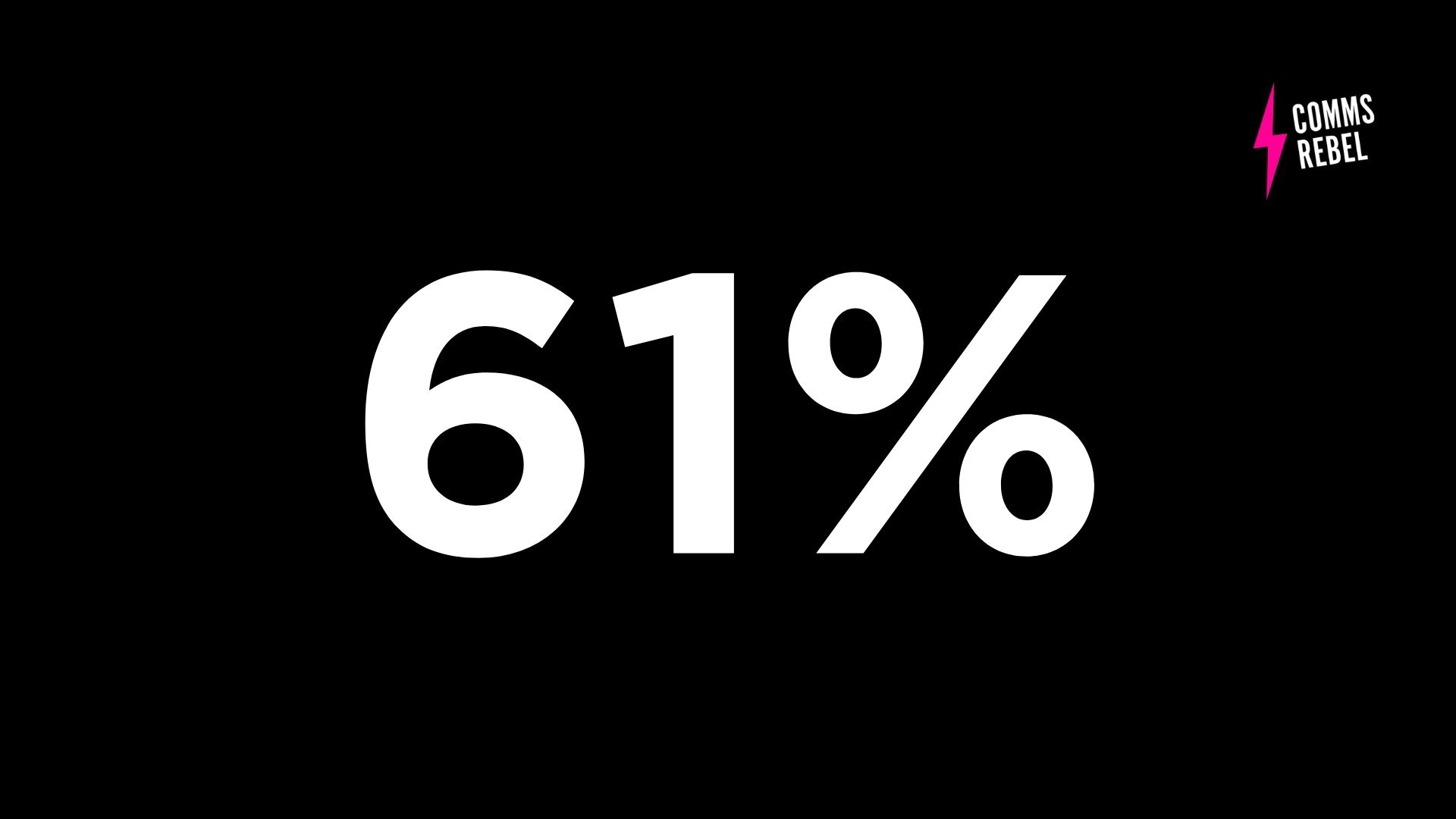
61%.
That’s the percentage of people currently languishing at work, not thriving, not engaged, just getting through the day the best they can. This is from the University of Illinois’s 2026 Workplace Wellbeing Report, and it stopped me in my tracks.
According to Gallup’s 2026 State of the Global Workplace report, only 10% of UK employees are fully engaged at work. Only 29% say they’re thriving, and 46% reported high levels of stress the previous day. Globally, employee engagement has now fallen to 20%, which is the first time Gallup has recorded two consecutive years of decline.
This means 80% of the world’s workers are disengaged or actively disengaged, costing the global economy over $10 trillion in lost productivity in 2025 alone.
It doesn’t quite fill us with hope for the future, does it?
However, not all is lost. Because I truly believe that this isn’t a company or a country problem, but a leadership challenge. Bear with me, and I’ll explain why.
What is languishing?
Languishing sits somewhere between burnout and thriving. You’re not off sick, you’re not falling apart, and you’re showing up. But there’s a flatness to everything which looks like a quiet loss of motivation, and a sense of just going through the motions.
Someone who’s languishing can still look fine from the outside. They’re in the meetings and are hitting their targets, but they’ve quietly stopped caring.
And the tough thing for leaders is that it can be difficult to spot but signs do exist. It’s often the person who used to pitch ideas in meetings but now just nods along. The team member who’s stopped pushing back, not because they agree, but because they’ve decided it doesn’t matter. Or the colleague who used to ask questions and now just waits to be told what to do.
That’s languishing in action.
The thing that actually changes it
Many organisations respond to this by throwing things at people. Wellness apps, resilience training, random social events, pizza Fridays etc. And look, I’m not against these things; it’s all good stuff, but none of that gets to the root of it.
The research consistently points to psychological safety.
Psychological safety is at risk of becoming a buzzword, and I can see people’s eyes glaze over when it’s mentioned, but it’s noted as the leadership metric for 2026. And when it’s done well, it can make an incredible difference in the workplace. Questions like: can I be honest here without it costing me? Can I raise a concern without someone rolling their eyes? Can I admit I’m struggling without it being used against me? Can I disagree, respectfully, without being written off as difficult?
When the answer to these questions is yes (and the behaviour demonstrates this), the data is striking. Workplaces with high psychological safety see a 19% boost in productivity and a 31% increase in innovation. For underrepresented groups such as women, people of colour, people with disabilities, LGBTQ+ employees etc retention rates increase by four to six times when they feel psychologically safe.
There is nothing fluffy about those numbers. But so many leaders still file psychological safety under the ‘soft stuff,’ but I challenge that framing every time.
The confidence connection
I consistently argue that languishing and psychological safety are both confidence problems.
When someone is languishing, they’ve often lost confidence, not necessarily in themselves, but in their workplace, in their leaders, and in the idea that things can change. When psychological safety is absent, people don’t feel confident enough to contribute fully. They self-censor, they hold back, and they tend to play it safe.
And a workforce full of people playing it safe doesn’t perform at its best.
This is something I explore a lot in my book, Decoding Confidence, the idea that confidence isn’t purely an individual thing. You can do all the inner work, you can build your self-belief, practise your voice, and show up ready to contribute. But when you walk into a room where none of that is welcome, the environment will win every single time.
That’s why building confident workplaces can’t be a side project. It has to be a priority.
Four questions worth sitting with
There’s no point in giving you a checklist of things you need to follow because real change is never that neat and every culture is different. But here are four questions I’d invite you to sit with honestly.
Where are you making it safe to not know? Leaders who always have to have the answer, who fill every silence, who signal (often without meaning to) that uncertainty is weakness, can often teach their teams to hide. People see this as a signal to stop asking for help. They stop admitting what they don’t know. And that’s when it becomes a culture of pretending, not a culture of confidence. When did you last say, “I don’t know, let’s work it out together”?
What’s your feedback-to-action ratio? Only one in ten employees believes their feedback leads to change. That’s a trust deficit, and it builds over time. If you’re asking people for input but not closing the loop, even to say “we heard this and here’s why we can’t act on it right now” silence gets read as dismissal, every time.
Who gets to feel safe and who doesn’t? Psychological safety isn’t always distributed equally. Research consistently shows that underrepresented groups often feel less safe, even in teams that consider themselves inclusive. Are there patterns in who speaks up and who goes quiet? Who gets their ideas built on and who gets talked over? Those patterns are gold as it will give you a lot of insight in what’s happening across the organisation.
How are you actually showing up? Gallup’s latest data show that manager engagement has dropped by 9 points since 2022. Leaders are stretched and generally a bit miserable, and that filters through to teams. Your stress, your confidence, your emotional state, it’s incredibly contagious, whether you mean it to be or not. This isn’t about toxic positivity, but it’s a reason to check in with yourself before you walk into the room and get the support you need, either through coaching or mentoring.
The bit that stays with me
It doesn’t matter where you work in the world; the data is telling the same story. People at work are not okay. And too many of them have quietly stopped believing things can be different.
But they can be different. Not through a single intervention or a new policy but through small, consistent, intentional acts of leadership. The question that invites a real answer, the moment you admit you got something wrong or the meeting where you genuinely make space for a view that isn’t yours.
That’s where culture is actually made.
You don’t have to overhaul everything, just start noticing what’s going on around you.
I cover this topic in more detail in my Decoding Confidence podcast, which is for leaders who want to build workplaces where people can be their best selves. There’s a new episode every Monday. Find it wherever you listen to podcasts. And if you want any support with communications, culture, change and confidence, message me and let’s have a chat.