Change Communication: The Four Es of Engagement
How to adapt your messages to support people through change
Everyone experiences change differently. Yet when organisations communicate change, we often default to the same approach: a town hall, a lengthy email or a message from the CEO explaining what’s happening and why.
There’s nothing necessarily wrong with these channels, but are we considering how people might be feeling when they receive those messages?
Recently, I spoke with an Executive Team about some of the pitfalls to watch out for when communicating complex change. One of the things I shared was how important it is to adapt your communication depending on where people are in their change journey.
Because what someone needs when they’re first hearing about a change can be very different from what they need when they’re beginning to accept it.
Using the Change Curve to understand people’s reactions
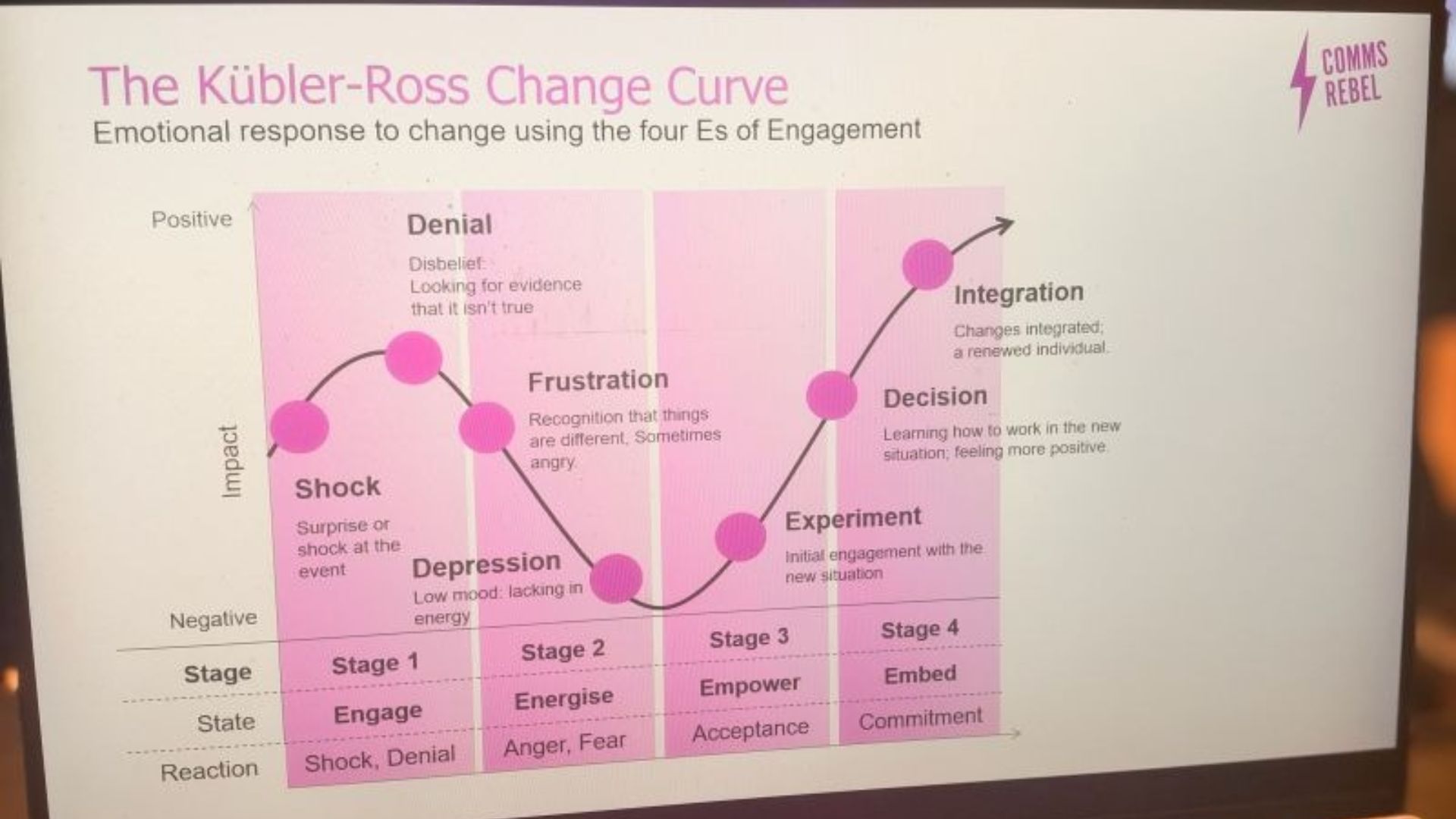
One framework I often use when discussing change communication with leaders is the Kübler-Ross Change Curve.
I know some people aren’t fans of using the Change Curve to explain organisational change, and I understand the concerns. People don’t experience change in neat, predictable stages, and there’s no guarantee they’ll respond in the same way.
But I find it a useful guide for helping leaders think differently about how change may impact their people.
Frameworks aren’t perfect. They’re there to guide our thinking, encourage conversations and help us consider perspectives we might otherwise overlook.
Over the years, I’ve used the curve to explain how leaders and communication teams can adjust their messages depending on people’s emotional responses.
I call my approach the Four Es of Engagement: Engage, Energise, Empower and Embed.
Each state of engagement requires a different communication approach, because people are asking different questions and may need different types of support.
Engage: When people are in shock or denial
When change is first announced, people may feel shocked, confused or unsure about what it means for them.
Even if leaders have spent months planning a change, it’s worth remembering that employees may only just be hearing about it.
At this stage, communication should focus on helping people understand what’s happening, why it’s happening and what it could mean for them.
Town halls, direct emails and video messages can be useful ways to introduce the change and provide consistent information.
But don’t assume one announcement is enough.
People need time to process information, and they may have questions you haven’t anticipated. Be clear about what you know, acknowledge what you don’t know and explain when people can expect further updates.
The priority is helping people feel informed rather than overwhelming them with information.
Energise: When people are fearful or angry
As the reality of change begins to sink in, people may start expressing frustration, fear or anger.
They might question the reasons behind decisions, worry about their future or resist what’s being proposed.
This is where communication needs to become more personal and two-way.
One-to-one conversations, team meetings and pulse checks can help leaders understand what people are thinking and feeling.
Rather than sending more emails explaining why the change is necessary, create opportunities to listen.
It’s also important not to automatically label people as difficult or resistant simply because they’re asking challenging questions.
Their concerns may highlight something important that hasn’t been considered.
Leaders don’t need to have all the answers, but they do need to demonstrate empathy, be open to feedback and follow through where possible.
Trust is particularly important during change, and how you respond to difficult conversations can make a real difference.
Empower: When people are hopeful and accepting of change
As people begin to feel more positive about the change, they may become curious about what it means in practice.
They might start exploring new ways of working, asking questions about implementation or sharing ideas about how things could be improved.
This is an opportunity to involve people more actively.
Drop-in sessions, social channels such as Viva Engage, and opportunities to share lessons learned can help colleagues exchange experiences and explore possibilities.
Rather than simply telling people what needs to happen, give them opportunities to contribute.
Consider what information, tools and support they need to feel confident about the changes being introduced.
Empowering people isn’t just about asking for their opinions. It’s also about demonstrating that their contributions are valued and, where possible, showing how their feedback influences decisions.
When people feel included in the process, they’re better placed to support the change.
Embed: When people are committed to supporting change
Once people begin accepting and supporting the change, communication still has an important role to play.
One mistake organisations can make is assuming the communication work is finished once a new system, structure or way of working has been introduced.
But embedding change requires ongoing attention.
Focus groups, hackathons and recognition programmes can create opportunities for people to continue contributing, identify improvements and celebrate progress.
Regular newsletters and team briefings can also help reinforce key messages and share examples of what’s working.
This is about making change part of everyday organisational life rather than treating it as a project with a fixed end date.
Keep listening, recognise people’s efforts and make space for continuous improvement.
The aim is to help people feel ownership of the change and maintain momentum beyond the initial implementation.
One approach won’t work for every organisation
Of course, these four states aren’t rigid stages that everyone will move through in the same order.
Some people may feel positive about change from the beginning, while others need more time. People’s responses may also shift as circumstances change.
That’s why understanding your people and your organisational culture is so important.
The channels I’ve mentioned are suggestions, not a definitive list. A town hall might work brilliantly in one organisation but fall flat in another. Equally, a social platform may encourage meaningful conversations in one workplace but have very little engagement elsewhere.
Before deciding on your approach, review your existing communication channels. Look at what’s working, where people are engaging and whether you’re reaching different groups across the organisation.
Most importantly, listen to your employees and be willing to adapt.
The Four Es of Engagement provide a way for leaders, managers and communication teams to think more inclusively about how they support people through change.
Because effective change communication isn’t about sending the same message to everyone and hoping it lands. It’s about recognising that people experience change differently and adapting your approach to meet their needs.
If your organisation is navigating complex change, get in touch with CommsRebel to find out how we can help you develop a more inclusive and effective change communication approach via email or contact form.